

Ehlers-Danlos Syndrome (EDS) Treatment & Whole Person Support
Ehlers-Danlos Syndrome (EDS) is a connective tissue disorder that affects far more than your joints. Our physician led approach looks beyond hypermobility to evaluate inflammation, mast cell activation, hormones, nutrition, and the overlapping conditions that often contribute to chronic symptoms.
Hypermobility
Connective Tissue Disorder
Often Overlaps with MCAD & Lipedema
Your Connective Tissue Holds Everything Together
Connective tissue is the body's support system. It provides structure, stability, and flexibility to nearly every organ, joint, blood vessel, and muscle. When collagen is altered, the effects can extend far beyond joint hypermobility, influencing multiple body systems throughout daily life.
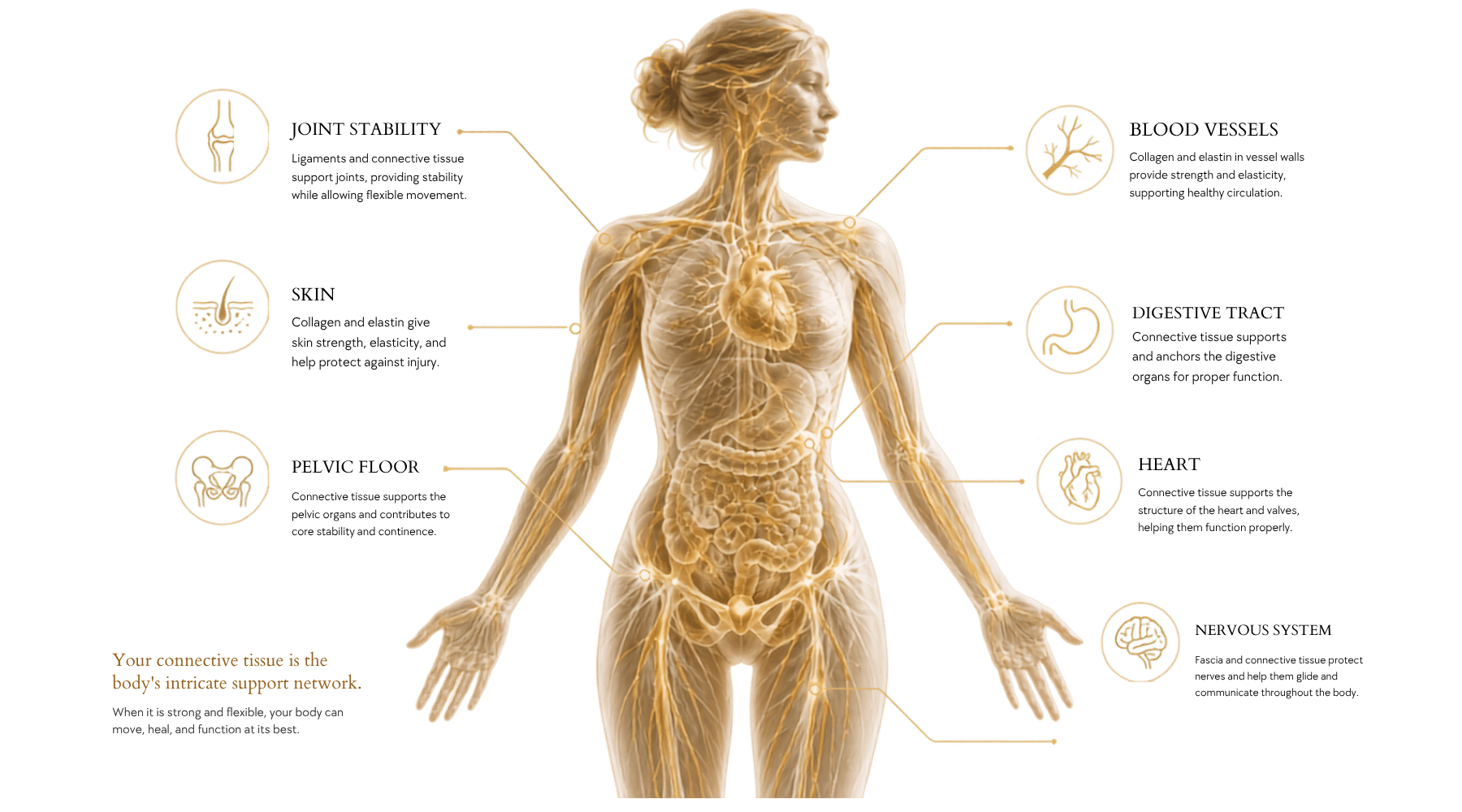
How EDS Impacts More Than Just Your Joints
Ehlers-Danlos Syndrome is a connective tissue disorder, not simply a joint disorder. Because connective tissue provides strength and support throughout the body, symptoms can affect multiple organ systems. This is why many people experience concerns that seem unrelated, even though they share the same underlying cause.
-
Skin
Helps maintain elasticity, strength, and wound healing.
-
Blood Vessels
Supports the walls of blood vessels, allowing them to stretch and function properly.
-
Digestive System
Helps support organs and contributes to normal digestive function.
-
Joints
Provides stability, flexibility, and support for healthy movement.
-
Heart
Strengthens connective structures that support the heart and its valves.
-
Pelvic Floor
Provides structural support for pelvic organs and core stability.
-
Nervous System
Surrounds, protects nerves while supporting communication throughout the body.
-
Eyes
Contributes to the structure and stability of the eyes and surrounding tissues.
Building the EDS Connection
Recognizing the Signs
Joint instability
Frequent sprains
Chronic pain
Fatigue
Stretchy skin
Easy bruising
Poor wound healing
Digestive symptoms
Headaches
Pelvic floor dysfunction
Autonomic symptoms
Jaw instability
EDS Rarely Exists Alone
MCAS
Lipedema
POTS
Lymphedema
GI Disorders
Hormones
Chronic Pain
Fatigue
Support Your Body’s Functionality
-
Joint Protection
Protection your joints strom excessive stress helps prevent injury, reduce pain, and support longterm mobility.
-

Strength
Targeted strength supports stability. improves function, and helps your body handle daily demands with more ease.
-

Nutrition
Nourishing your body with the right nutrients supports connective tissue, energy, and overall cellular health.
-

Inflammation
Reducing chronic inflammation helps decrease pain, support healing, and protect your tissues over time.
-
Nervous System
A regulated nervous system supports pain control, stress response, and the body's ability to heal and adapt.
-
Recovery
Rest, sleep, and recovery practices allow your body to repair, restore, and show up stronger each day.

Stronger Support Starts with Understanding Your Body
When we understand how EDS affects the whole body, we can support it in powerful, targeted ways, so you can move, live, and thrive with greater confidence.
You are not alone. Healing is possible.
Experience the Lipedema Warrior Clinic Difference
-
We listen first:
Every patient journey begins with understanding your story. We take time to review your history, symptoms, and prior diagnoses, especially if you’ve felt dismissed, misdiagnosed, or overlooked in your search for answers about lipedema or chronic inflammation.
-
We assess the full picture:
Lipedema is rarely isolated. Our comprehensive assessment looks at lymphatic health, mast cell activation, connective tissue disorders, hormone imbalances, and chronic inflammation to uncover the bigger picture behind your symptoms.
-
We go deeper when needed:
When appropriate, we go beyond basic labs to identify root causes. This may include testing for gut health, immune and food sensitivities, metabolic function, hormone balance, genetics, and nutrient deficiencies to support accurate lipedema diagnosis and treatment.
-
We build a personalized plan:
No two patients are the same. Your customized care plan is built around your diagnosis, symptoms, and goals, and may include nutrition strategies, conservative therapies, inflammation support, and root cause healing approaches.
-
We stay involved:
You’re not left to figure this out alone. Our team stays involved through follow up care, patient portal access, coaching, and trusted referrals so you have continuous support throughout your lipedema treatment journey.
-
We focus on long term results:
Our goal isn’t just short term symptom relief. We help you build a sustainable approach that supports your body over time, so you can see continued progress, not temporary improvements.
How We Investigate Your Case
2.
1.
4.
Evaluation
3.
Movement Assessment
Personalized Plan
Nutritional Support
Take the First Step Toward Understanding EDS
If you experience joint hypermobility, chronic pain, frequent injuries, unexplained fatigue, or overlapping inflammatory symptoms, we are here to help. Schedule a visit with our physician to discuss evaluation, supportive testing, and personalized strategies designed around your body and your goals.
Ehlers Danlos Syndrome (EDS) FAQs
-
EDS is a group of inherited connective tissue disorders that affect collagen, leading to joint hypermobility, tissue fragility, chronic pain, and systemic symptoms that can impact multiple body systems.
-
Common symptoms include flexible or unstable joints, frequent sprains or dislocations, chronic musculoskeletal pain, fatigue, digestive issues, easy bruising, and soft or stretchy skin.
-
Yes. Many individuals with EDS also experience mast cell activation, autonomic dysfunction, or lipedema. These conditions can overlap and influence symptom severity, which is why comprehensive evaluation is important.
-
Diagnosis is based on clinical evaluation, symptom history, joint hypermobility assessment, and genetic testing.
-
EDS is a genetic condition and cannot be cured, but symptoms can be managed through conservative strategies including joint stabilization, inflammation reduction, nutritional support, and coordinated specialty care.