

Real Answers for Women Living with Lipedema.
Through functional medicine, nutrition, education, metabolic health, and personalized care, we help women improve their health, reduce inflammation, and take back control whether surgery is part of your journey or not.
You deserve more than symptom management. Reclaim your life.
We Treat More Than Lipedema
-

Hormones
-

Inflammation
-

MCAS
-

Blood Sugar
-
Gut Health
-

Lymphatics
-

Nutrition
-

Sleep
-

Stress
-

Connective Tissue
We Are Here to Support Your Health Journey at Every Step
Wherever you're starting, we'll help you understand what comes next. Every woman’s journey is different.
-

I am Looking for Answers
We help uncover the "why" behind your symptoms through comprehensive evaluations, advanced testing, and physician guided care designed to bring clarity to complex health concerns.
-

I've Been Diagnosed
Receiving a diagnosis is just the beginning. We create personalized care plans that help you better understand your condition, manage symptoms, and move forward with confidence.
-

I Want to Improve Naturally
From nutrition and inflammation support to hormone balance and lifestyle strategies, we focus on evidence informed care that helps your body function at its best.
-

I am Considering Surgery
We help you prepare before surgery with personalized optimization strategies and provide education so you can make informed decisions with confidence.
-

I am Healing After Surgery
Recovery doesn't end after the procedure. We provide ongoing support to reduce inflammation, encourage healing, and help protect your long-term health.
You don’t have to figure this out alone.
Whether you're searching for answers, preparing for surgery, or building a healthier future, we're here to help you take the next step.
Experience the Lipedema Warrior Clinic Difference
-
We listen first:
Every patient journey begins with understanding your story. We take time to review your history, symptoms, and prior diagnoses, especially if you’ve felt dismissed, misdiagnosed, or overlooked in your search for answers about lipedema or chronic inflammation.
-
We assess the full picture:
Lipedema is rarely isolated. Our comprehensive assessment looks at lymphatic health, mast cell activation, connective tissue disorders, hormone imbalances, and chronic inflammation to uncover the bigger picture behind your symptoms.
-
We go deeper when needed:
When appropriate, we go beyond basic labs to identify root causes. This may include testing for gut health, immune and food sensitivities, metabolic function, hormone balance, genetics, and nutrient deficiencies to support accurate lipedema diagnosis and treatment.
-
We build a personalized plan:
No two patients are the same. Your customized care plan is built around your diagnosis, symptoms, and goals, and may include nutrition strategies, conservative therapies, inflammation support, and root cause healing approaches.
-
We stay involved:
You’re not left to figure this out alone. Our team stays involved through follow up care, patient portal access, coaching, and trusted referrals so you have continuous support throughout your lipedema treatment journey.
-
We focus on long term results:
Our goal isn’t just short term symptom relief. We help you build a sustainable approach that supports your body over time, so you can see continued progress, not temporary improvements.

Care that fits your life
Comprehensive Care. Personalized for You.
In Person or Virtual Care
Functional Medicine
Lab Testing
Nutrition
Coaching
Medication Management
Long Term Follow Up
True physician led, root cause focused care.
Understanding Lipedema
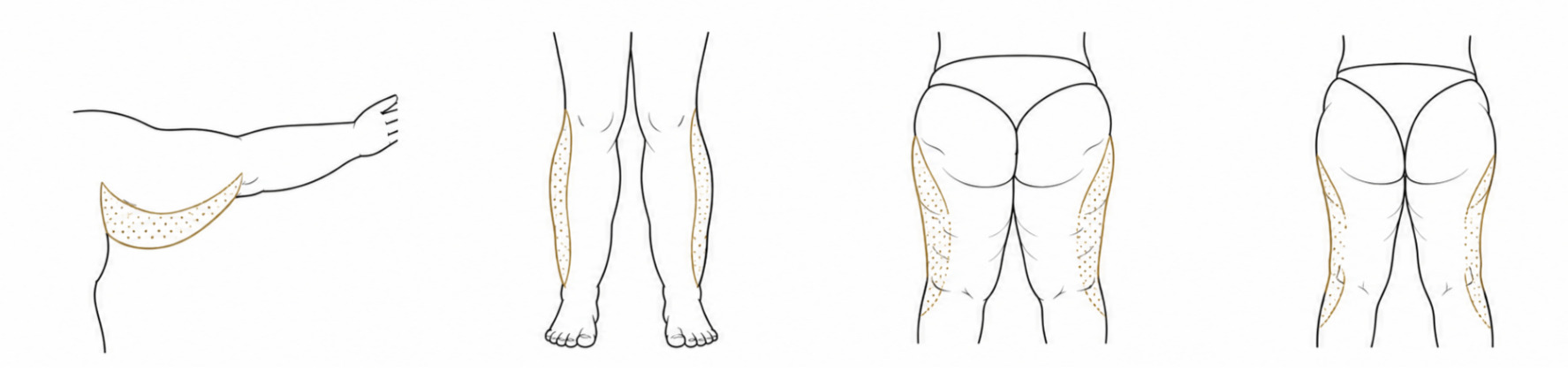
Lipedema is a rare adipose tissue disorder that almost exclusively affects women. It is characterized by disproportionate but symmetrical fat deposition in the legs, hips, and buttocks, sometimes in the abdomen and arms, sparing the hands, feet, and neck. The adipose tissue in lipedema is resistant to weight loss and exercise, leading to significant suffering and impacting women's lives. The condition often emerges during significant hormonal changes such as puberty, pregnancy, and menopause.

Meet The Lipedema Co-Conspirators
Lipedema is rarely the whole story. Hormones, chronic inflammation, blood sugar, lymphatic function, gut health, sleep, stress, connective tissue disorders, and other underlying factors can all influence how you feel. That's why we don't just treat a diagnosis, we look at the whole person. By identifying and addressing the "co-conspirators" contributing to your symptoms, we help you build a personalized plan designed for lasting health, not temporary fixes.
Symptoms & Comorbidities
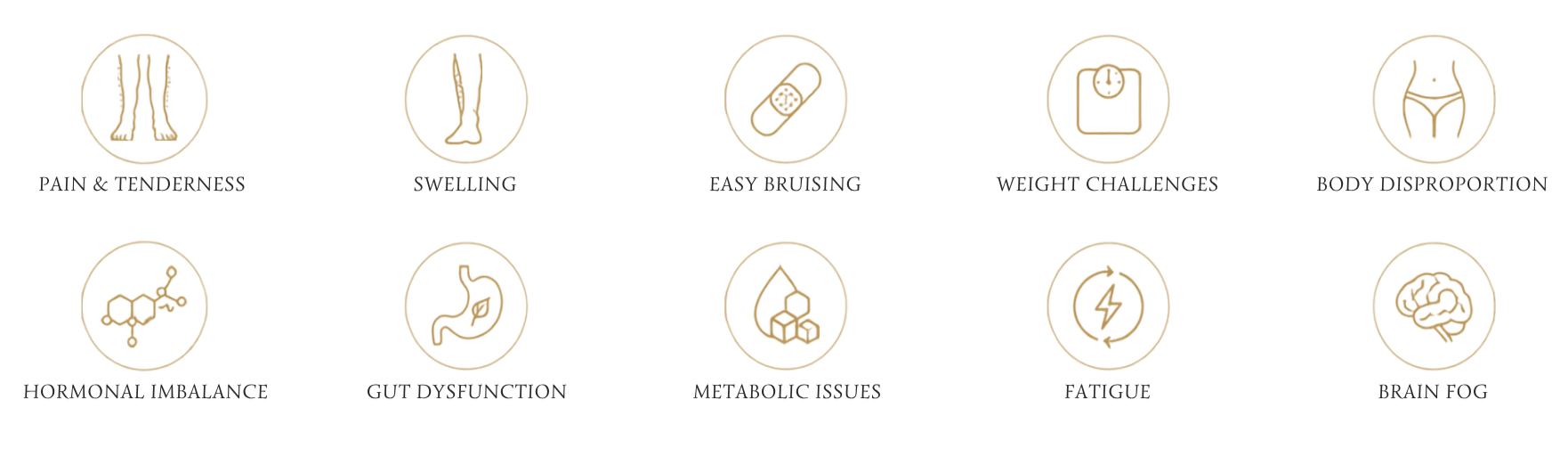
Women with lipedema often experience easy bruising, heaviness in the affected extremities, and pain to simple touch. Lipedema can be associated with other comorbidities and, if left untreated, can progress to affect the lymphatic system, leading to lipo-lymphedema. Misdiagnosis is common, as lipedema can be confused with obesity or other rare adipose tissue disorders like multiple symmetric lipomatosis, familial multiple lipomatosis, Madelung’s disease, Dercum’s disease, or lipohypertrophy.
Why Physician Led Specialty Care Matters
Physician led, not algorithm led
Specialized in lipedema and overlooked comorbidities
Designed for medically complex women
Focused on diagnosis, management, and long term partnership
Testing used strategically, not as a substitute for clinical judgment

Meet Your Doctor
Dr. Liza Rodriguez brings over 20 years of medical experience and personal experience with lipedema. We are excited to offer in person or virtual clinic for diagnosis, referrals, and individualized support. Dr. Rodriguez is currently licensed in 45 states and DC, giving medical access to women across the nation. We look forward to working with each and every one of you.
Clarity Blueprint
•
Books
•
Courses
•
Self Assessments
•
Supplements
•
Lab Kits
•
Clarity Blueprint • Books • Courses • Self Assessments • Supplements • Lab Kits •
Stay informed. Take control of your health.
Subscribe for trusted guidance on lipedema diagnosis, treatment options, inflammation support, and holistic care strategies, written for women who are ready for real answers.